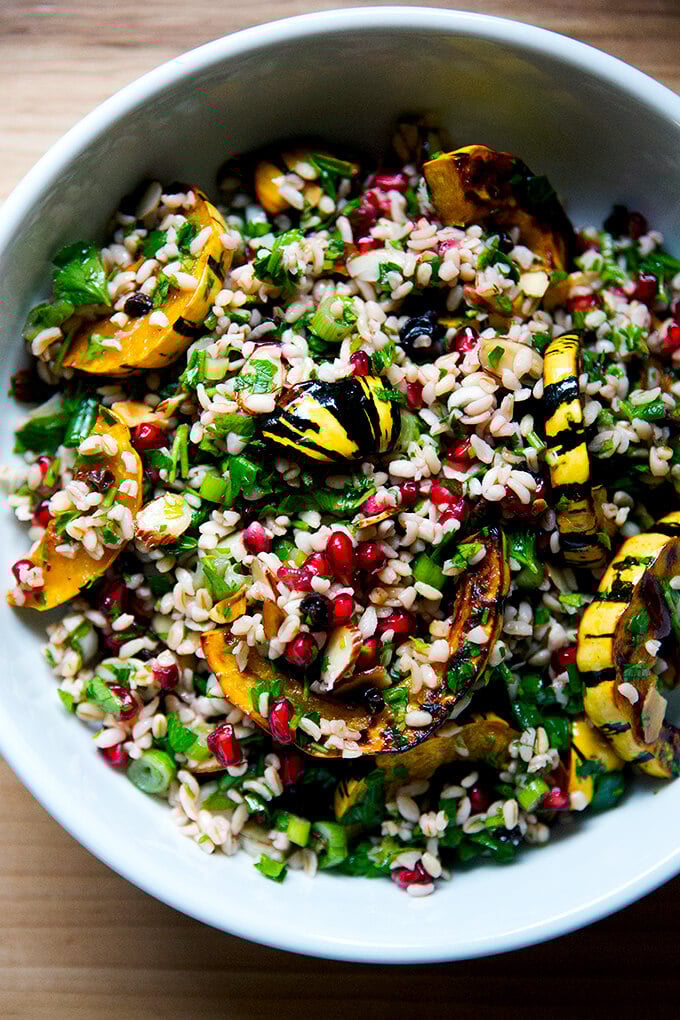
Winter Tabbouleh with Delicata: A Festive, Balanced Side for Any Meal
The holiday season often conjures images of rich gravies, hearty roasts, and an abundance of traditional, often heavy, dishes. While these classics hold a special place in our hearts and on our tables, they can sometimes leave us craving a counterbalance – a spark of freshness, a zesty lift to cut through the richness. Enter
winter tabbouleh with roasted delicata squash, a vibrant and unexpectedly festive dish that promises to revolutionize your approach to holiday meal planning. This isn't just a side salad; it's a culinary revelation, offering a harmonious blend of textures, temperatures, and, most importantly, a much-needed acidic brightness that can transform an entire feast.
This unique rendition of the beloved Mediterranean staple takes on a distinctly seasonal character, incorporating the earthy sweetness of roasted delicata squash, the jewel-like burst of pomegranate, and the subtle chew of currants. Far from being a mere afterthought, this winter tabbouleh stands out as a substantial, yet delightfully light, addition to any meal, providing both visual appeal and a refreshing palate cleanser that often goes missing amidst the festive spread.
The Unsung Hero of Holiday Feasts: Why Acid Matters
Consider the typical holiday menu: mashed potatoes, stuffing, green bean casserole, succulent turkey or ham, and an array of decadent desserts. While undeniably delicious, this lineup often shares a common characteristic – a general lack of acidity. Food writer and chef Samin Nosrat famously highlighted this culinary imbalance, recalling instances where she found herself liberally spooning cranberry sauce over every dish to introduce that much-needed zesty bite. Her observation rings true for many, as traditional holiday meals, in their celebration of richness and tradition, frequently overlook the crucial role of acid in achieving a truly balanced and enjoyable dining experience.
Acid isn't just about making things sour; it's about brightening flavors, cutting through fat, stimulating saliva, and preventing palate fatigue. It's what makes a dish sing, providing a refreshing counterpoint to the savory, sweet, and umami elements. Without it, even the most exquisitely prepared feast can feel heavy and one-dimensional. This is precisely where a thoughtfully constructed dish like
winter tabbouleh with roasted delicata squash shines. Its dressing, often a potent blend of lemon juice and vinegar, alongside the tartness of pomegranate arils, acts as that vital acidic counterpoint, awakening the taste buds and ensuring every bite of your holiday meal is as exciting as the first. For more on how acid can elevate your holiday spread, explore
Brighten Your Holiday Menu: Winter Tabbouleh's Acidic Zest.
Deconstructing Winter Tabbouleh: Beyond the Traditional
While classic tabbouleh typically features finely chopped parsley, mint, tomatoes, onions, and bulgur, all dressed with lemon juice and olive oil, its winter counterpart embraces the bounty of the colder months. The transformation is both clever and delicious, maintaining the essence of tabbouleh while introducing seasonal depth and warmth.
At the heart of this winter iteration is the
roasted delicata squash. Delicata is an ideal choice for several reasons: its thin skin is edible, eliminating the need for tedious peeling; its flesh, when roasted, becomes beautifully sweet and creamy; and its distinctive scalloped edges make for visually stunning half-moon slices. Roasting the squash caramelizes its natural sugars, intensifying its flavor and adding a comforting warmth that contrasts wonderfully with the fresh herbs.
But the innovation doesn't stop there. To further enhance the festive feel and complex flavor profile, this winter tabbouleh often includes:
* **Pomegranate Arils:** These vibrant ruby-red seeds offer a burst of tartness, a satisfying pop of texture, and an undeniable festive elegance.
* **Currants:** Small and sweet-tart, dried currants contribute a chewy texture and concentrated fruity notes that complement the other ingredients.
* **Toasted Almonds (or other nuts):** A scattering of toasted almonds provides a delightful crunch and a nutty depth that rounds out the overall flavor and texture.
* **Abundant Fresh Herbs:** While parsley and mint remain central, their generous inclusion is key to the tabbouleh's signature freshness and bright green color.
The interplay of these components creates a symphony of textures – the soft squash, chewy currants, crunchy almonds, bursting pomegranate, and tender bulgur – all unified by a sharp, invigorating dressing. It’s a dish that feels substantial yet surprisingly light, making it the perfect partner for richer holiday fare.
Crafting the Perfect Balance: Tips for a Stellar Winter Tabbouleh
Achieving an outstanding
winter tabbouleh with roasted delicata squash goes beyond simply assembling ingredients. It's about understanding how to balance flavors and textures for maximum impact. Here are key tips to elevate your dish:
1. **Mastering the Acid-to-Fat Ratio:** The dressing is the soul of any tabbouleh. For a truly bright and exhilarating dressing, aim for a 2:1 ratio of acid to fat. For instance, combine 1/4 cup fresh lemon juice with 1/4 cup white balsamic vinegar (total 1/2 cup acid) to 1/4 cup high-quality extra virgin olive oil. The mix of lemon and vinegar adds complexity and a sharper edge than lemon alone. Don't be afraid to adjust to your personal preference, but start with this powerful ratio for an assertive dressing that will genuinely cut through richness. For an in-depth guide on perfecting your dressing, check out
Crafting Perfect Winter Tabbouleh: Acid-to-Fat Ratio & Dressing Tips.
2. **Strategic Dressing and Resting:** Dress the tabbouleh *without* the roasted delicata squash initially. This allows the bulgur and herbs to absorb the flavors of the dressing fully. Let it sit for at least 10 minutes (or even longer, allowing flavors to meld). After this resting period, taste and adjust the seasoning – you might need more salt, pepper, or even a touch more acid. Once the flavor profile is perfect, gently fold in the roasted delicata squash. Adding the squash at the very end ensures it retains its integrity and doesn't become overly soft or absorb too much dressing, keeping its distinct texture and appearance.
3. **Ingredient Quality Matters:** Use the freshest herbs you can find. Freshly squeezed lemon juice makes a significant difference compared to bottled. Opt for a good quality extra virgin olive oil, as its flavor will be prominent. When choosing delicata squash, look for firm, unblemished specimens.
4. **Simple Roasting for Delicata:** Preparing the delicata squash is straightforward. Wash it thoroughly, halve it lengthwise, scoop out the seeds, and slice into 1/2-inch thick half-moons. Toss with a drizzle of olive oil, salt, and pepper. Roast at around 400°F (200°C) for 20-25 minutes, flipping halfway, until tender and lightly caramelized.
Versatility on Your Plate: More Than Just a Side
While perfectly poised to be the star side dish on your holiday table,
winter tabbouleh with roasted delicata squash is remarkably versatile. Its combination of substance and lightness makes it adaptable for numerous culinary scenarios:
* **A Light Lunch:** Enjoy it on its own as a refreshing and satisfying vegetarian meal. Add some crumbled feta or goat cheese for extra creaminess and tang, or a handful of chickpeas for added protein.
* **Meal Prep Essential:** Prepare a larger batch at the beginning of the week for healthy and delicious lunches or quick dinners.
* **Stuffed Squash Main:** As suggested by its very nature, this tabbouleh makes an excellent stuffing for roasted squash halves, transforming it into an elegant and wholesome vegetarian main course. Simply roast larger delicata or acorn squash halves until tender, then fill them generously with the prepared tabbouleh.
* **Accompaniment to Proteins:** It pairs beautifully with grilled chicken, pan-seared fish, or roasted lamb, offering a fresh contrast to rich meats.
* **Potluck Favorite:** Its vibrant colors and unique flavor profile are sure to make it a standout dish at any potluck or gathering.
In conclusion, the
winter tabbouleh with roasted delicata squash is much more than just a recipe; it's an invitation to rethink your holiday menu and embrace the power of balance and freshness. Its vibrant colors, diverse textures, and invigorating burst of acidity promise to elevate any meal, transforming traditional heaviness into a well-rounded and delightful culinary experience. So, this winter, break away from the ordinary and let this festive, wholesome, and utterly delicious tabbouleh be the bright, balancing force on your table. Your palate will thank you.