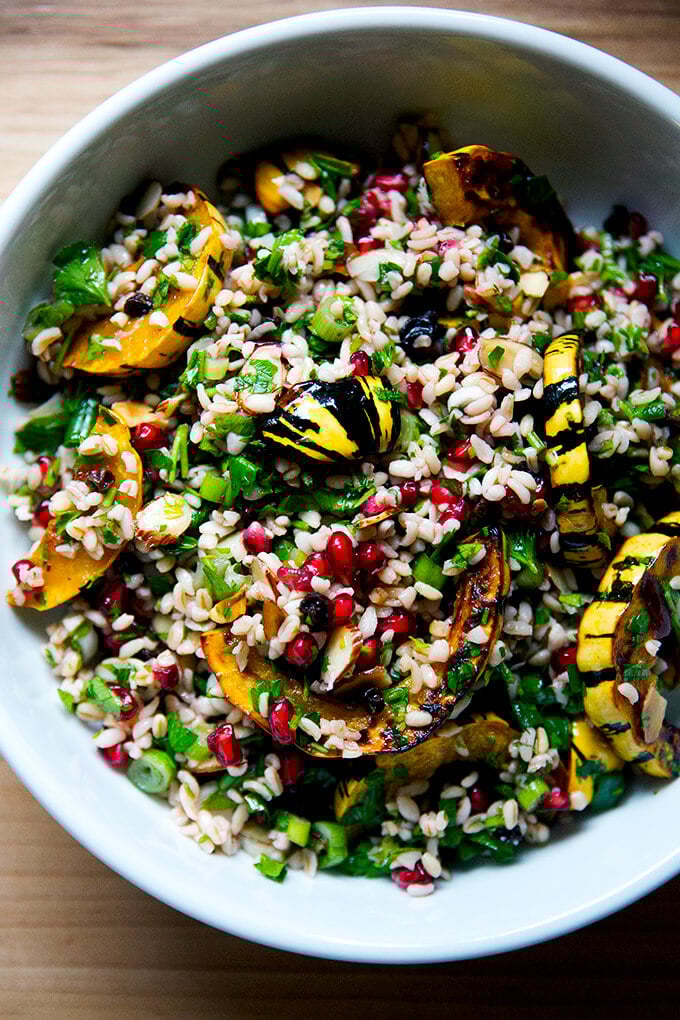
Brighten Your Holiday Menu: Winter Tabbouleh's Acidic Zest
The holiday season, with its rich tapestry of traditions and comforting dishes, often brings with it a delightful abundance. Gravy-laden roasts, creamy casseroles, and sweet potato soufflés grace our tables, creating a deeply satisfying, if sometimes heavy, culinary experience. But as celebrated food writer Samin Nosrat astutely points out in her acclaimed book "Salt Fat Acid Heat," there's often an unsung hero conspicuously absent from this festive spread: *acid*. Nosrat vividly recounts a Thanksgiving where she found herself spooning cranberry sauce over virtually every item on her plate, desperately seeking that much-needed zesty counterpoint. This observation resonates deeply, highlighting a subtle imbalance in many traditional holiday menus. While cranberry sauce certainly offers a jolt of sharpness, and perhaps a vinegary braised cabbage makes an appearance, the overall profile leans heavily towards richness and sweetness, leaving the palate craving something bright and invigorating. This realization often sparks a desire to innovate, to introduce a fresh perspective without abandoning cherished customs. And that's precisely where a vibrant winter tabbouleh with roasted delicata squash enters the scene – a dish designed not just to add color and texture, but to provide that vital acidic zest that transforms a meal from merely satisfying to truly transcendent. It’s an invitation to rediscover balance, proving that a holiday feast can be both indulgent and refreshingly vibrant.The Unsung Hero: Why Acid is Essential on Your Holiday Table
Thanksgiving and other winter holidays are synonymous with indulgence. We revel in the comforting weight of traditional recipes, often passed down through generations. However, this focus on hearty, comforting fare can inadvertently lead to a culinary blind spot: the underrepresentation of acid. Acid, in cooking, acts as a palate cleanser, a flavor enhancer, and a crucial balancing agent. Without it, even the most delicious rich dishes can feel monotonous, leading to what chefs call "palate fatigue." Consider the typical holiday plate: a medley of savory roasted meats, creamy sides, and perhaps a sweet dessert. While each component is delicious in its own right, the collective effect can be heavy. A sharp, acidic element provides a much-needed contrast, cutting through the richness, brightening the overall flavor profile, and making each subsequent bite as exciting as the first. It's the culinary equivalent of a reset button. Beyond cranberry sauce, which often leans sweet, few dishes consistently bring a strong acidic punch to the holiday table. When acid *is* present, as in the delightful tang of a vinegar-spiked braised red cabbage, its impact is undeniable. It elevates the entire meal, demonstrating that balance isn't just about nutrition, but about creating a dynamic and engaging eating experience. Embracing this principle opens the door to dishes like our feature attraction, which promises to revolutionize your festive spread.Winter Tabbouleh with Roasted Delicata Squash: A Symphony of Flavors and Textures
Imagine a dish that is at once hearty and light, substantial yet bright, and exquisitely beautiful on any festive table. This is the promise of winter tabbouleh with roasted delicata squash. Far from the summer picnic staple, this winter rendition reimagines tabbouleh as a sophisticated and seasonally appropriate side that perfectly addresses the call for acid. The foundation of this dish is typically fine bulgur, providing a wonderfully earthy and chewy base. But it's the interplay of fresh ingredients that truly makes it sing. A generous hand with fresh herbs – vibrant parsley and cool mint – infuses the tabbouleh with an aromatic freshness. Pomegranate arils burst with sweet-tart juice, while dried currants add pockets of concentrated sweetness, both contributing to a dazzling visual appeal reminiscent of festive jewels. Toasted almonds introduce a delightful crunch and nutty depth, completing the textural mosaic. What truly elevates this dish into the winter realm, and indeed makes it so uniquely suitable for holiday menus, is the inclusion of roasted delicata squash. Delicata, with its tender, edible skin and naturally sweet, creamy flesh, roasts beautifully, caramelizing at the edges to offer a wonderful contrast to the fresh herbs and tart fruits. Its gentle sweetness complements the sharpness of the dressing, creating a harmonious balance. The beautiful, scalloped edges of the squash rings or crescent-shaped pieces add an undeniable elegance, making it an especially festive and pretty dish. Moreover, if your holiday menu is already brimming with traditional starchy items, the delicata squash can be thoughtfully adjusted or even omitted, allowing the vibrant tabbouleh to shine as a lighter alternative. However, its inclusion truly transforms the dish into a complete culinary experience, proving that Winter Tabbouleh with Delicata: A Festive, Balanced Side for Any Meal offers a compelling argument for balance and flavor.Mastering Your Winter Tabbouleh: Tips for Perfection
Achieving a truly exceptional winter tabbouleh with roasted delicata squash goes beyond simply combining ingredients; it lies in understanding a few key principles that maximize flavor and texture.Here are some insights to guide you:
- The Acid-to-Fat Ratio is Paramount: One of the most critical elements in a bright, balanced tabbouleh dressing is the ratio of acid to fat. Aim for a 2:1 ratio of acid to fat. For instance, a quarter cup of fresh lemon juice combined with a quarter cup of white balsamic vinegar to a quarter cup of high-quality olive oil creates a dressing with remarkable sharpness. While a mix of vinegar and fresh citrus offers complexity, feel free to use what you have on hand. This generous amount of acid is what truly makes the tabbouleh pop, ensuring it fulfills its role as a palate cleanser.
- Dress, Rest, Then Adjust: Resist the urge to add the roasted delicata squash immediately after dressing. Instead, dress the bulgur and herb mixture first, allowing it to sit for at least 10-15 minutes. This crucial resting period allows the flavors to meld, and the bulgur to fully absorb the acidic dressing, softening and infusing it with taste. After this rest, taste and adjust the seasoning to your liking – perhaps a touch more salt, a grind of pepper, or an extra squeeze of lemon. Only then should you gently fold in the roasted delicata squash, ensuring it remains intact and its texture is preserved.
- Fresh Herbs are Non-Negotiable: Tabbouleh thrives on the vibrant freshness of its herbs. Use abundant, freshly chopped parsley and mint. Avoid dried herbs entirely; they simply won't deliver the same bright, aromatic impact.
- Perfectly Roasted Delicata: For the squash, aim for tender-crisp pieces with beautifully caramelized edges. Toss the delicata with a little olive oil, salt, and pepper before roasting at a relatively high temperature (around 400°F/200°C) until golden brown and tender. Don't overcrowd the baking sheet, as this will steam rather than roast the squash.
- Quality Olive Oil: Since the olive oil is a significant component of the dressing, use a good quality extra virgin olive oil. Its flavor will shine through.
For more detailed insights into crafting the perfect dressing and achieving that ideal balance, explore Crafting Perfect Winter Tabbouleh: Acid-to-Fat Ratio & Dressing Tips.
